Coaxial Propeller Mechanism – Counter-Rotating Shaft Transmission


Coaxial Propeller Mechanism Explained
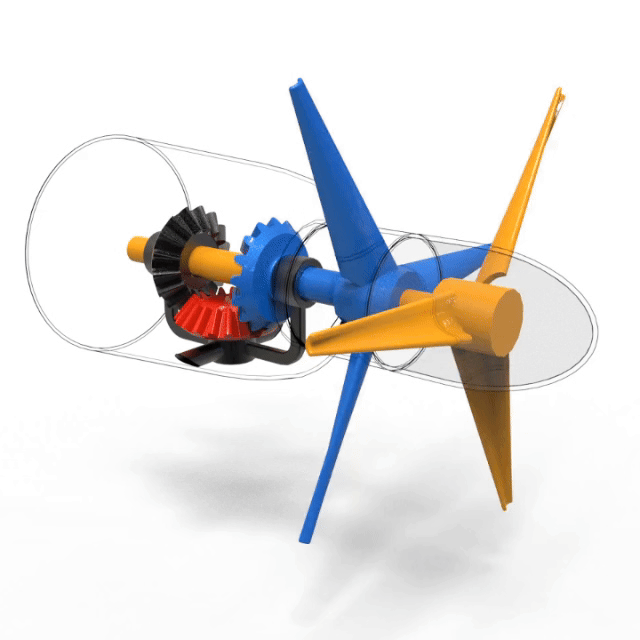
The coaxial propeller mechanism is a mechanical transmission designed to drive two propellers along a single axis in opposite rotational directions. This system is commonly found in aviation, UAV propulsion, and marine engineering.
Why Counter-Rotation Matters
A single rotating propeller creates reaction torque that can destabilize the vehicle. A coaxial system balances this by spinning a second propeller in the opposite direction, which:
Cancels torque reaction
Increases thrust efficiency
Reduces swirl energy loss
Improves directional stability

How the Mechanism Works
The system relies on concentric shafts:
Inner solid shaft drives one propeller
Outer hollow shaft drives the second propeller
A gear train inside the transmission splits torque from the engine or motor. One path keeps the rotation direction, while another path uses additional gears to reverse it before driving the outer shaft.
Main Components
Spur or bevel gears
Hollow outer shaft with internal bearings
Central solid shaft
Thrust bearings to handle axial loads
Independent propeller hubs
Engineering Challenges
Precise alignment of concentric shafts
Managing axial thrust forces
Gear load distribution
Vibration control
Applications
Coaxial helicopter rotors
Counter-rotating drone systems
Marine dual-propeller drives
High-efficiency experimental aircraft
The coaxial propeller mechanism is a powerful example of how gear systems can manipulate direction and torque within a compact and efficient design.


Comments